Overview
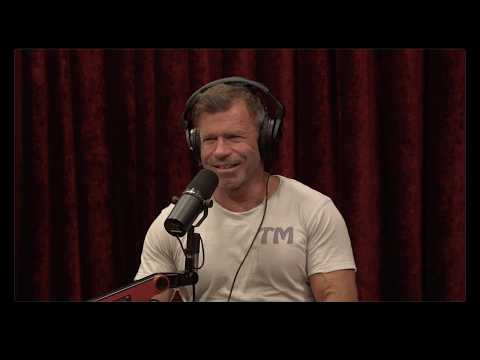
Taylor Sheridan did not write his first script until he was 40 years old, with $800 left in a savings account and a pregnant wife. That first spec was Sicario -- a drug-trade thriller studios initially found too difficult to produce. He shelved it, wrote Hell or High Water in three weeks, sold it first, then watched Sicario come out the same year and earn him an Academy Award nomination. What followed was one of the most productive and commercially dominant runs in modern television: Yellowstone, 1883, 1923, Landman, Lioness, Mayor of Kingstown, Tulsa King, and more -- with Paramount spending an estimated $500 million a year producing his content.
This JRE conversation touches on many subjects -- horses, politics, Alaska, arrowheads, the prison system -- but the threads most relevant to a student of the entertainment business are Sheridan's writing philosophy, his relationship to authenticity as a creative strategy, and how he turned his lifestyle into a fully integrated business empire. He charges Paramount $50,000 a week to film at his ranch, sells them cattle by the head for scenes, runs a production company bearing his hometown's name, and co-owns the historic 6666 Ranch -- partly funded by his Paramount deal and partly the reason he says he keeps doing the shows.
Sheridan's path out of a failed acting career into creative and financial control is a case study in identifying a genre you can dominate, writing only what you would pay to see, and building IP that compounds over time. The conversation also covers the origin of his book "How Not to Die in Prison," a project he structured as a travel guide to help an old friend -- a genuine act of generosity that became a Simon and Schuster deal. The instinct to frame every project as a structured, navigable system runs throughout everything Sheridan does.
He was born in Chapel Hill, grew up in Fort Worth, and spent weekends on his mother's ranch in Cranfills Gap, Texas -- an experience that gave him both a cowboy identity and the source material for his most enduring work. His writing method relies on living the world he portrays rather than researching it from a desk. That commitment to lived authenticity -- horses, ranching, landscape, frontier history -- is what separates his output from the crowded field of prestige television.
Why This Matters
Sheridan's career arc is a practical blueprint for creative professionals who want to control the terms of their work. He did not arrive with industry connections, formal training, or a development deal. He arrived with a spec script, a genre, and a point of view strong enough that studios eventually competed for access to it. The takeaway is not "write a great script." The takeaway is: identify the category where your lived experience gives you an irreplaceable advantage, build your first piece of evidence in that category, and refuse to dilute your voice to please people who haven't bought anything from you yet.
The business model he eventually constructed is equally instructive. Rather than licensing his creative output to a studio and walking away, Sheridan embedded himself in every layer of production -- showrunner, director, location owner, cattle provider, cowboy camp operator, production company principal. Paramount does not just pay for scripts; they pay for an entire ecosystem that Sheridan built and owns. The ranch is not a lifestyle expense -- it is infrastructure.
For anyone building a content-based business, the key principle is the same whether you are making television or producing intelligence pages, voiceover scripts, or geospatial media: authenticity that comes from living the subject, not performing it, is the only truly defensible creative position. It cannot be replicated by someone who does not have the life experience behind it. Sheridan's version of that is the American West. The question this page raises for any reader is: what is your version?
His approach to creative constraints is also worth studying. The discipline of "absurdly simple plots" so that character can breathe is a structural choice, not a limitation. It forces everything into the relationship between people rather than the mechanics of plot -- which is where audiences actually live. That same principle applies to any kind of persuasive content: the simpler the structure, the more room the human element has to do its work.
Key Points
- Sheridan wrote his first script at age 40 with $800 left in savings, starting with a TV pilot for Mayor of Kingstown, then pivoting to spec features after being told he needed a film as a calling card. Sicario was written first, Hell or High Water sold first, and Sicario produced first -- all within a compressed window of creative output driven by financial urgency.
- His writing philosophy is built on absurdly simple plots that create space for deep character work. He avoids exposition aggressively, a habit formed from years as a supporting actor who had to deliver clunky dialogue written by others. The simpler the plot, the more the audience can invest in the people.
- Sheridan does not outline heavily. He describes the process as the story telling itself -- if he is writing three scenes to justify one story point, he knows he is not listening. Hell or High Water was written in three weeks and shot from that draft with no rewrites.
- He writes only what he would pay to see. This is a core constraint, not a suggestion. The market-facing version of this is: write the thing you are most qualified to write, not the thing you think someone else wants to buy.
- Setting is treated as a character. The landscape in his work is not backdrop -- it reflects and amplifies emotional states, creates obstacles, and drives plot. His research for 1883 included his great-great-grandmother's actual journal from the Kentucky-to-Texas migration in the 1840s.
- He turned his ranch lifestyle into vertically integrated revenue. Paramount pays $50,000 per week to film at Bosque Ranch, plus fees for cattle appearing on screen, cowboy camp costs for cast preparation, and production company overhead through Bosque Ranch Productions. The ranch is not a personal expense -- it is production infrastructure.
- He used a portion of his $200 million Paramount overall deal to help fund the co-purchase of the historic 6666 Ranch (Four Sixes) for approximately $320 million with a group of investors. His quote: "I was real rich for 45 minutes. Then I was broke again. That was the trade. I do the shows for the ranch."
- His approach to acting as preparation for writing was to identify everything that did not work -- actors allergic to scenes that require saying yes, no, hello, or goodbye; exposition-heavy dialogue that killed scenes -- and to build his writing practice around avoiding those things.
- The book "How Not to Die in Prison" originated as a genuine act of help for an old friend, Tom Nelson, a former drug dealer and ex-convict who reached out in a bad way with a sick child and a cancer scare. Sheridan structured the concept as a travel guide -- modeled on Lonely Planet -- rather than a memoir, and a Simon and Schuster deal followed three chapters.
- He is skeptical of writing by committee. His shows are almost entirely written by him alone, which is unusual at his scale. This is both a creative choice and a business one -- his voice is the product, and it cannot be reproduced by a writers' room.
- Sheridan credits ADHD as a professional asset in the right context. He can write for 12 hours straight in a crowded airport if he is working on something he loves -- and cannot process anything he finds uninteresting. Finding the right subject is not optional; it is the prerequisite for everything that follows.
- He frames the mayor or governor role as a CEO job, not an ideological one. The CEO of a state's job is to attract business and tourism, manage infrastructure, and make the state function. This lens applies equally well to how he approaches running a creative enterprise -- systems and operations, not just vision.
Quotable
AI-generated from source material. Verify important details against the original source.
Taylor Sheridan
"I've made up little mantras for myself. One is 'Write the movie you'd pay to go see.' Another is 'Never let a character tell me something that the camera can show me.' You always want the audience wondering what's going to happen next, never what's happening."
This quote, drawn from Sheridan interviews cited in research, distills his entire creative methodology into three rules. It is a masterclass in constraint-based creative practice -- each rule eliminates a failure mode rather than prescribing a technique. Useful for any content creator, not just screenwriters.
Taylor Sheridan
"I was real rich for 45 minutes. Then I was broke again. That was the trade. I do the shows for the ranch."
On using his Paramount deal to help fund the 6666 Ranch purchase. This line is memorable because it inverts the expected relationship between creative work and financial reward -- his motivation is not the money from the shows, it is the land the money enables. Reveals a clarity of values that is rare and powerful.
Taylor Sheridan
"If I'm really struggling with a scene and writing three scenes to justify this one thing, I know I'm not listening to the story. There is a story that wants to be told and if you listen, it tells itself very easily."
This is one of the most practical diagnostic tools in creative work: resistance as a signal, not an obstacle to push through. The idea that a story has its own direction and the writer's job is to receive it rather than force it is counterintuitive enough to be genuinely useful.
Taylor Sheridan
"I had a voice that fits in a very specific genre. I'm not gonna worry about being typecast. I'm just gonna dominate that genre."
A concise articulation of niche dominance as a business strategy. Most creators spend years trying to avoid being categorized; Sheridan ran toward categorization as soon as he identified his category. The result was an uncrowded competitive position in neo-Western prestige drama that he has owned for a decade.
Taylor Sheridan (on the prison book concept)
"We're going to write a travel guide to prison for the accidental inmate. It breaks it down -- overview of the country, glossary of terms, the language, the food, where you stay, how to navigate. We're going to do that for prison."
Demonstrates Sheridan's ability to reframe familiar content through an unexpected structural lens. The Lonely Planet format applied to prison is not just a hook -- it is a genuine organizational principle that makes the content more accessible and the project more sellable. The instinct to borrow structure from one domain and apply it to another is a core creative skill.
Concepts
Core Creative Principles
The Simple Plot as a Creative Weapon
Sheridan's most counterintuitive creative principle is his commitment to absurdly simple plots. Most writers treat plot complexity as a sign of ambition; Sheridan treats it as a failure to trust character. His reasoning, drawn from his acting experience, is that complex plots force exposition -- characters explaining the mechanics of the story to each other and to the audience -- which is both dramatically inert and insulting to intelligent viewers.
A simple plot creates room. If the audience does not have to track a complicated series of events, they can invest fully in the people and what they want, fear, and feel. This is where Sheridan's writing lives. Hell or High Water is two brothers robbing banks. Wind River is an investigator and a wildlife officer looking for a killer in winter Wyoming. Yellowstone is a ranching family defending their land. These are simple enough to fit on a matchbook -- and rich enough to sustain seasons of television.
Setting as Character
Landscape in Sheridan's work is not decorative. The arid Texas plains in Hell or High Water reflect the economic stripping of a dying region. The frozen Wyoming mountains in Wind River are as much a presence as any actor. The Montana ranch in Yellowstone is the thing being fought over, the thing being protected, and the thing that defines everyone who touches it.
This is not a stylistic choice; it is a structural one. When setting drives plot and reflects character, you get scenes for free that other writers have to invent. The environment does the dramatic work. For content creators in any medium, the equivalent principle is: make your context do work. The framing, the platform, the format, the landscape of the piece should all be earning their place.
Listening to the Story
Sheridan describes his writing process as listening rather than constructing. When the work is going well, it is because the story is telling itself -- the characters behave as they would, the scenes arrive in the right order, and the draft moves quickly. When it is going badly, the signal is strain: three scenes written to justify one story point, resistance that does not resolve, the sense of forcing something that does not want to go.
The practical implication is to treat creative friction as diagnostic information rather than evidence of insufficient effort. If a section is hard, it may be wrong -- not in execution, but in conception. The willingness to back up and reconsider rather than push through is what separates a three-week first draft from a six-month slog that still does not work.
Business and Positioning Strategy
Genre Domination Over Genre Diversity
When Sheridan recognized that his voice fit a specific genre -- neo-Western crime drama rooted in the American frontier -- he made a deliberate choice not to fight categorization. Instead, he moved to own it. Every subsequent project deepened his position in that category rather than diversifying away from it. The result is that his name is now essentially synonymous with a genre, which is an extraordinary competitive position.
Most creators worry about being typecast. Sheridan's insight is that being typecast in the right category is not a trap -- it is a moat. If you are the person most associated with a specific type of work, you get the first call when anyone needs that type of work done. You are not competing on price or availability; you are competing on authenticity, and you have already won that competition by having the life experience that generated the genre in the first place.
Vertical Integration of the Creative Business
Sheridan's relationship with Paramount illustrates what full vertical integration looks like in a creative career. He is not just the writer. He is the showrunner, the director, the location owner, the cattle provider, the training camp operator, the production company principal, and a co-owner of the iconic ranch that gives his work its visual identity. Paramount does not hire a writer who happens to know about cowboys. They hire an ecosystem.
Each layer of this structure generates independent revenue and compounds the value of the others. The ranch is worth more because it is a filming location. The filming location is worth more because the show it produces is one he writes and runs. The production company captures overhead that would otherwise go to a studio. This is the difference between selling a service and building an asset base.
Authenticity as an Unfakeable Competitive Advantage
The reason Sheridan's work feels different from other prestige television is not production budget -- it is that the world he portrays is one he actually inhabits. He knows what a reining horse does when it spooks. He knows how the light falls across the Bosque County landscape in late fall. He knows how a working ranch functions economically, physically, and socially. This knowledge is not researchable -- it has to be lived.
This is the most durable creative advantage available, and it is also the most obvious once you see it. Every creator has domains of lived experience that no competitor can replicate without having had the same life. The question is whether you are leveraging those domains or trying to compete in territory where your advantage is smaller. Sheridan's decision to write only what he knows deeply, rather than what he thinks the market wants, is what made him irreplaceable.
Mental Models and Operating Principles
ADHD as a Precision Tool
Sheridan describes his ADHD not as a disability but as a precision instrument -- one that operates at full power only when pointed at the right target. He can write for twelve hours straight in a crowded airport on a project he loves. He cannot process information about topics he finds uninteresting. The implication is that managing ADHD effectively is not about medicating the intensity but about aligning the intensity with the work that demands it.
This reframe has broader application beyond ADHD. Hyperfocus is a capability, not just a symptom. The question is whether your work environment and project selection create the conditions for that capability to fire. Sheridan's entire career is structured to keep him in the zone of deep focus on material that matters to him -- which is also why the output is so consistent and so fast.
The Travel Guide Framework for Unfamiliar Territory
The conceptual move that produced "How Not to Die in Prison" is worth isolating as a standalone tool. Sheridan needed a structure for a subject that had no established format. Rather than inventing one from scratch, he borrowed one from a completely different context -- the Lonely Planet travel guide -- and applied it wholesale. Overview, glossary, language, food, where to stay, how to navigate. The structural fit was so strong that the book essentially wrote itself around the framework.
This principle -- borrowing organizational structure from an adjacent domain and applying it to your subject -- is replicable in almost any content creation context. The hard part of most content projects is not having information; it is knowing how to organize it. When you find a structural metaphor that maps cleanly onto your subject, the organizational problem is solved before you write a word.
The CEO Lens on Leadership Roles
Sheridan's description of the governor role as a CEO job -- attract business and tourism, manage infrastructure, serve the employees of the state -- is a useful stripping-down of any leadership position to its operational core. He applies it to criticize urban governments that have become agenda-driven rather than operationally focused, but the lens transfers cleanly to any organization.
A showrunner is a CEO. A creative director is a CEO. A solo operator running multiple projects is a CEO. The question in each case is the same: are the systems functioning, are the people resourced, is the output being delivered, and is the enterprise attracting the right kind of attention and revenue? Ideology and vision matter, but they are secondary to the operational health of the organization.
Friendship as Deal Structure
The Tom Nelson story is a case study in how to help someone without creating a dependency. When a friend called in a bad way -- single father, cancer scare, no income -- Sheridan's instinct was not to lend money (he notes a 100% failure rate on loans to friends) but to build a project that would generate sustainable income over time. He identified Tom's unique asset -- 17 years of lived prison experience -- structured a book concept around it, and got a Simon and Schuster deal in three chapters.
The underlying principle is: help people by building something with them rather than giving them something from you. The first creates an asset with ongoing value. The second creates a dynamic that typically ends the friendship and solves nothing long-term. Sheridan extended this principle by handling the cancer situation first -- flying Tom to Texas for a proper diagnosis -- before addressing the financial problem. Sequence matters: stabilize the person, then build the business.
Implementation
AI-generated from source material and supplementary research. Verify against original sources before acting.
The Sheridan Method is a ten-step sequence covering how to take a creative project from raw concept to series greenlight -- and how to build a business infrastructure around it so that the creative output generates compounding returns rather than one-time fees.
Identify your irreplaceable domain
Before writing a word, audit your actual life experience for the territory where you are unchallengeable. Sheridan's was the American West -- the ranching world, frontier history, and the moral complexity of land and legacy. This is not the genre you find interesting; it is the world you have actually lived in and cannot fake. List the three or four domains where your experience gives you access that a researcher or outsider simply cannot replicate. That list is your candidate set for creative work.
Write your calling card in your dominant domain
Sheridan was advised to write a feature film as a calling card -- not because he expected it to be made, but because it would demonstrate voice, structure, and genre command to the people he needed to convince. Your calling card is the first piece of evidence that you can execute at the level you are claiming. It should be in your irreplaceable domain, it should be something you would pay to see, and it should be written without any consideration for whether it is commercially viable. Commercial validation follows creative proof, not the other way around.
Build the concept before the first scene
Sheridan does not sit down with a blank page. He knows who his characters are and where the story is going before he types a word. For Hell or High Water, he drove from Los Angeles to Montana and back -- thousands of miles of thinking -- before he sat down to write. Whatever that incubation process looks like for you, budget time for it. Walking, driving, extended thinking without a keyboard. The goal is to arrive at the desk with the broad strokes fully formed so that the writing session is about execution, not discovery.
Strip the plot to its simplest possible form
Once you have your concept, apply maximum pressure to simplify it. Sheridan's test: can you describe the entire story in one sentence without losing anything essential? Two brothers rob banks. A wildlife officer investigates a murder in winter Wyoming. A ranching family defends their land. If your logline requires three sentences to be accurate, the plot is too complex. Cut subplots. Remove characters. Find the spine and build only around the spine. The complexity belongs in the characters and their relationships, not in the mechanics of what happens.
Use resistance as a diagnostic, not an obstacle
Sheridan's rule: if you are writing three scenes to justify one story point, you are not listening. When a section of the work is consistently difficult, ask whether the difficulty is a signal that the underlying concept is wrong -- not the execution. Back up. Question the premise. Look for the version of the scene or structure that does not require forcing. Fast drafts are a product of the story wanting to be told; slow drafts with heavy resistance are often a signal to reconsider rather than persist.
Make the setting earn its place in every scene
For each scene you write, ask whether the setting is doing active work -- amplifying emotional state, creating physical obstacles, or establishing stakes -- or whether it is merely backdrop. Sheridan's settings always do all three. If your setting is passive, either change the setting to one that works harder, or write the scene so the environment becomes a factor. This principle applies beyond screenwriting to any content format: the context and framing of a piece should be doing dramatic or structural work, not just providing a location.
Get feedback from the right people only
Sheridan values feedback from actors (who reveal whether characters can be played) and from industry professionals (who know whether the work is producible). He does not value feedback from people outside the industry because they are not the buyers and they often do not know how to read the medium. Apply this principle to your work: identify whose opinion will materially improve the project because they understand the form and the market, and ignore the rest. Unsolicited feedback from people who are not your target audience is usually more expensive in confidence than it is valuable in information.
Protect and compound your voice by not diluting it
Sheridan writes almost entirely alone. At his scale -- $500 million in annual Paramount production -- this is an unusual choice. He made it because he understood that his voice is the product, and a writers' room produces consensus rather than a singular point of view. Evaluate your own creative work through the same lens: what is the minimum level of collaboration that maintains the quality of the work without diluting the thing that makes it distinctive? Sometimes that minimum is zero. Protect that.
Build infrastructure that turns your lifestyle into recurring revenue
Sheridan's ranches are not lifestyle expenses -- they are production infrastructure that generates revenue from Paramount while simultaneously serving as the authentic creative environment where the work is made. Examine your own creative environment and ask which elements could be monetized or made integral to client delivery. A workspace, a collection, a skillset, a process, a community -- anything that is already part of how you live and work is a candidate for integration into the business model rather than a cost center.
Use the travel guide framework to structure unfamiliar content
When you need to organize content in a domain that has no established format, look for a structural metaphor from a completely different context that maps cleanly onto your subject. Sheridan used the Lonely Planet travel guide to structure prison survival knowledge. The format (overview, glossary, language, food, navigation, customs) worked perfectly because it was built to orient strangers in unfamiliar territories -- which is exactly what the book needed to do. Before inventing a structure from scratch, survey what already exists in adjacent domains and see if you can borrow the architecture whole.
Tools & Resources
Mentioned Resources
| Resource | Description |
|---|---|
| How Not to Die in Prison | Taylor Sheridan and Tom Nelson's prison survival guide, structured as a Lonely Planet-style travel guide. Published June 23, 2026, available in print, digital, and audio. |
| Cattlemen's Steakhouse | One of Taylor Sheridan's restaurant ventures, referenced in the episode description. |
| 6666 Beef | Commercial beef brand from the Four Sixes Ranch, one of the oldest ranches in Texas. Co-owned by Sheridan's investor group. |
| Bosque Ranch Headquarters | Sheridan's primary Texas ranch, serving as family home, filming location for Yellowstone, event venue, and base of Bosque Ranch Productions. |
| JRE #2517 -- Taylor Sheridan (YouTube) | The full source episode on the PowerfulJRE channel. |
Suggested Resources
| Resource | Description |
|---|---|
| Taylor Sheridan's Extreme Productivity (Trung Phan / Substack) | Detailed breakdown of Sheridan's output, productivity methods, Paramount deal structure, and the business logic behind the Yellowstone franchise. Well-sourced and concise. |
| Screenwriting Wisdom from Taylor Sheridan (Final Draft) | Compiled advice on visualization before writing, plot simplicity, feedback process, and the car-ride incubation method used on Hell or High Water. |
| 12 Pieces of Taylor Sheridan Screenwriting Advice (Greenlight Coverage) | Organized breakdown of Sheridan's core screenwriting principles including setting as character, tension building, dialogue authenticity, and character-first structure. |
| 6 Filmmaking Tips from Taylor Sheridan (Film School Rejects) | Source-cited filmmaking principles drawn from Sheridan interviews, covering the actor's perspective on writing, directorial mantras, and structural flexibility. |
| Taylor Sheridan -- Wikipedia | Comprehensive career timeline, biographical background, full filmography, and business context including ranch holdings and production company structure. |
Source Material
[00:01]
Joe: What's happening? Taylor: What's up, buddy? [On the belt buckle] So this one is for a horse I have called Maverick Buzz the Tower that won reserve at the Futurity. Joe: And they give you a belt buckle if you win? Taylor: A belt buckle and money. Joe: That's a dope belt buckle. Taylor: Expensive belt buckle.
[~00:30]
Taylor: There's a stallion I really like -- his name's Spook's Got a Whiz. They're just incredibly balanced, real feely, very quickfooted, big stoppers -- but they see dead people. They see ghosts. So like once every three months for no reason this thing's going to check out. Decide it's not safe here. You can come with me or I'm gonna buck your ass off. Joe: And his children have this as well? Taylor: Yeah. Joe: That's a big quirk. Taylor: Most of the time you can go to the store. We all deal with it because they're worth it.
[~05:00]
Joe: [On Shane Van Boening, the deaf pool player] He shuts his hearing aids off when he plays. He just goes click and goes into this world. Just balls and geometry and doesn't miss. Taylor: I think anybody who's good at anything is either ADHD or autistic. Joe: They tried to give me medicine for the ADHD. Taylor: They did give it to me when I was a kid. Joe: Really? Taylor: And then who knows -- but whatever -- and so I stopped taking it.
[~08:30]
Taylor: People say how in the world can you write a script -- you write all these things. Like it's not that hard. Once I know what it is, I can sit you in an airport with a thousand people. I won't hear them. I can sit there for 12 hours straight. Joe: Because you love it. Taylor: I just hyperfocus. But if somebody wants you to pay attention to the history of Pop-Tarts, it's not going in there. Joe: Yeah. That's the superpower -- you can find something you love and focus on it.
[~35:00]
Taylor: When I was writing Yellowstone, the governor of Montana at the time -- a Democrat, Steve Bullock -- I called him and asked what it's like to be a governor. He said: I thought I was going to make all these changes, and then I learned I am the CEO of a state. My job is take care of the people who live in the state, attract business and tourism, try to make the state make more money and make lives better. Infrastructure, city management, people management, tourism. That's my job.
[~55:00]
[Commercial break / ad read for Visible wireless]
[~01:15:00]
Taylor: [On his C6-C7 neck surgery] I had the disc. Yeah. Just cut some of it down. Joe: I wish I told you -- if that ever happens again, don't do that. There's other ways. Regenicine helped mine. I had a pretty bad bulging disc in my neck.
[~01:55:00]
Taylor: [On 1883 research] A lot of research, but interestingly one side of my family had come from Kentucky to Texas in the 1840s and my great-great-grandmother journaled. So I had the journal. And then I started finding other journals -- and reading about just how dangerous it was. Rivers were the most terrifying thing -- crossing rivers -- because no one swam. And most of the people who came in were European, a lot of Germans, central Europeans. They were promised free land. By the time they landed in Galveston, they'd have guides and wagons arranged. And they had no idea.
[~02:30:00]
Taylor: [On Tom Nelson and the book] So me and a buddy of mine shared an apartment together and we'd jog down to this gym every day -- called Buns on Beverly -- and there was this dude that showed up. Jacked but different than West Hollywood fit. [--] yolked. All these crazy tattoos. We became friendly and ended up becoming friends. His name's Tom Nelson. One day I said have you always lived in LA? He said well I've been here 19 years. 20 years. I said where you from? "Somewhere in the southeast." I said you always live in LA? He goes "Well no, I just got to LA. I've been in prison." I said oh how long? "17 years." I said oh. And I didn't ask anything else.
[~02:33:00]
Taylor: He reaches out -- it was maybe 18 months ago, two years -- and he goes "Hey man I'm in a bad way." He's a single father. Got a 5-year-old kid. Got [--] colon cancer. Dying. And I don't -- I'm a [--] 60-year-old felon. I can't get a job. Is there any work on your movies? And I said well first -- colon cancer, how bad, what stage? He goes "I don't know. They saw it on an X-ray." So I fly him to Texas where I know people. Fortunately the mass wasn't cancer. They do the surgery. Then I say I get you a job in a movie but it doesn't pay very good and the hours are [--] and you've got a 5-year-old daughter. And I said I have a 100% failure rate of loaning money to friends. But let me think of something.
[~02:35:00]
Taylor: I call him back. I go -- I got it Tom. We're going to write a travel guide to prison for the accidental inmate. Right? Somebody who [--] up and ends up there and doesn't know how to navigate this place. I bought a bunch of Lonely Planet Travel Guides to Thailand and Mexico and said look at these. It breaks it down -- overview of the country, glossary of terms, the language, the food, where you stay, how to navigate. We're going to do that for prison. And he goes "I'm in." I said great -- I'm going to write all the intros, build the structure, and walk you through it. It's literally a travel guide to prison. Walks you through day one, how to navigate the yard, being processed in, the food, the commissary, the gangs, the diseases, prison riots, how to get a job in there. Everything. Joe: Whoa. Taylor: It is a tour guide to prison.
[~02:36:00]
Taylor: We wrote three chapters of it. I took it out and Simon and Schuster read it, flipped, and me and Tom got a book deal. Joe: That's awesome. Taylor: He was able to sit with me and write it and take care of his kid. Joe: Good for you man, for doing that. Taylor: That one was a lot of fun.
[~02:37:00]
Taylor: [On prison recidivism] There's an 80-something percent recidivism rate in the US. For a guy to get out of prison and not go back, the odds are four to one against you. And not designed to rehabilitate -- all it's an institution that guarantees you're a criminal when you come out. Joe: Well I'm glad you wrote it. Taylor: I'll read it -- I promise I'm going to listen to it. Joe: Listen to it in the sauna. Taylor: There you go.
[~02:40:00]
Joe: Justin Gaethje, dude. Taylor: Yeah I just had him on. Joe: It's incredible. I saw him -- remember when I bumped into you at that fight in Vegas? That's the first time I'd seen him live. I go to a bunch of prize fights. I love boxing. And I'm watching that guy -- if he had decided to be a professional boxer, his striking is at that level. Taylor: He's a man. I'm glad he's an MMA fighter because he started out as an all-American wrestler. His particular style of aggression is so well suited for MMA. Joe: Yeah. It was wild. Wild to watch.
[02:40:00 -- End]
Joe: Thanks brother. Once again the book is called How to Not Die in Prison. Taylor: Yeah. Joe: Available now, audiobook, everything. Taylor: Yep. Joe: Thank you. Taylor: Awesome buddy. Thank you. Joe: Bye everybody.
AI Prompt
AI-generated prompt for use in a fresh session. Copy and paste to begin a guided implementation conversation.
AI Implementation Prompt
CONTEXT This prompt is based on Joe Rogan Experience #2517 featuring Taylor Sheridan (June 23, 2026). Sheridan is the writer, director, producer, and showrunner behind Sicario, Hell or High Water, Wind River, Yellowstone, 1883, 1923, Landman, Lioness, Mayor of Kingstown, and Tulsa King. Paramount spends approximately $500 million per year producing his content. He holds a reported $200 million overall deal with Paramount (transitioning to NBCUniversal after 2029). He co-owns the historic 6666 Ranch (Four Sixes) in Texas for approximately $320 million with a group of investors, and operates Bosque Ranch in Weatherford, Texas as his primary residence and a Paramount filming location generating $50,000 per week in location fees. Sheridan did not write his first script until age 40, with $800 in savings. He wrote Mayor of Kingstown as his first pilot, then Sicario and Hell or High Water as spec features. Hell or High Water sold first, was written in three weeks, and was shot without rewrites. He was nominated for an Academy Award for Best Original Screenplay. His creative output is almost entirely solo -- no writers' room for most projects. He frames his genre as neo-Western prestige drama rooted in the American frontier, and has made a deliberate choice to dominate that genre rather than diversify away from it. His additional projects covered in this episode include the book "How Not to Die in Prison" (co-written with ex-convict Tom Nelson, structured as a Lonely Planet-style travel guide to prison), and his ranching and restaurant businesses (6666 Beef, Cattlemen's Steakhouse, Bosque Ranch Headquarters). KEY PRINCIPLES 1. Write only what you would pay to see. Commercial validation follows creative proof. 2. Absurdly simple plots create space for character complexity. Exposition is a failure of structure. 3. Setting is a character -- it should amplify emotional states, create obstacles, and drive plot. 4. Resistance in the writing process is diagnostic. Three scenes to justify one story point means the concept is wrong, not the execution. 5. Identify your irreplaceable domain and dominate it rather than diversifying to avoid categorization. 6. Vertical integration turns creative output into a compounding asset base -- own the location, the company, the cattle, the brand. 7. Authenticity from lived experience cannot be faked or researched. It is the most durable competitive advantage available. 8. Build sustainable help structures for people you care about rather than loaning money. Create assets together. 9. Incubate before writing -- know the characters and the destination before the first scene. 10. Feedback is only useful from people who understand the form and the market. KEY LEVERS -- Genre ownership: being the defining voice in a specific category creates first-call positioning and price insulation. -- Lifestyle integration: converting lived experience into production infrastructure monetizes what others treat as personal overhead. -- Voice protection: writing alone preserves the singular point of view that makes the work distinctive and irreplaceable. -- Structural borrowing: applying organizational frameworks from adjacent domains solves content architecture problems quickly. -- Financial patience: accepting below-market fees for creative control in early stages compounds into leverage at scale. WHAT THIS IS NOT -- A formula for writing prestige television. Sheridan's method is deeply personal and rooted in his specific life experience. The principles transfer; the specific genre does not. -- A guide to fame or celebrity. Sheridan's career is a business case, not a star-making story. The focus is on control, leverage, and compounding asset value. -- A pitch for writing rooms or collaborative creative processes. His approach is explicitly solo. Collaboration may be right for others; it is not what produced his results. -- A recipe for overnight success. His first script sat in a drawer. Sicario took years to get made. The results were fast once the flywheel started; the flywheel took a decade to build. -- A model that requires ADHD or any specific neurological profile. The underlying principle -- align your deepest focus with the work that demands it -- is universal. IMPLEMENTATION MODES -- Apply: Help me apply the Sheridan method to my specific creative project. Evaluate my concept against his principles and identify structural weaknesses. -- Build: Help me design the business infrastructure around my creative output -- production company structure, location monetization, lifestyle integration. -- Diagnose: I am stuck on a specific section of a project. Help me determine whether the problem is execution or whether the concept itself needs to change. -- Critique: Review my logline, concept, or content structure against Sheridan's principles of simplicity, character primacy, and setting as character. -- Teach: Explain a specific Sheridan principle in depth with examples from his work and applications to my domain. -- Content Creation: Help me develop content about Sheridan's method -- articles, talks, frameworks -- for my audience. -- Opportunity Discovery: Help me identify the irreplaceable domain in my own experience and map it to creative or business opportunities. -- System Design: Help me build a repeatable creative production system modeled on Sheridan's solo output and vertical integration model. -- Decision Support: I am facing a decision about a creative project or business structure. Help me evaluate it through Sheridan's lens. -- Research Expansion: Help me go deeper on specific aspects of Sheridan's career, deal structures, ranch businesses, or creative methodology. AI OPERATING INSTRUCTIONS Ground all responses in the specific principles and examples from this source. Do not offer generic creative writing advice that is not tied to what Sheridan actually does and says. When the user's situation differs from Sheridan's, note the difference clearly rather than forcing a fit. Ask clarifying questions when the user's domain or project type is unclear. Challenge assumptions that contradict the core principles -- especially the temptation to add plot complexity, seek external validation early, or avoid genre commitment. Draw connections between the creative principles and the business principles where they reinforce each other. Keep responses practical and specific rather than motivational or aspirational. GUIDED DISCOVERY Ask me up to three questions, one at a time, to determine: (1) what I am trying to accomplish -- a creative project, a business structure, a content system, or something else; (2) which of Sheridan's principles are most directly relevant to my situation; (3) how those principles could be applied most effectively given my specific constraints and assets. Once you understand my situation, help me build a practical implementation plan.