Overview
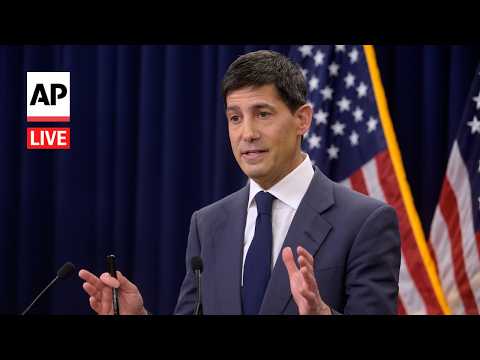
On June 17, 2026, newly installed Federal Reserve Chairman Kevin Warsh held his first press conference following an FOMC policy meeting. The committee voted unanimously to hold the federal funds rate target at 3.5 to 3.75 percent, marking the fourth consecutive meeting with no rate change. Warsh described economic activity as expanding at a solid pace despite elevated uncertainty stemming in part from the conflict in the Middle East, with productivity growth and capital investment both strong and the labor market stable near a 4.3 percent unemployment rate. Inflation was acknowledged as persistently running well above the Fed's 2 percent goal for more than five years.
The centerpiece of the press conference was Warsh's announcement of five independent task forces, each charged with proposing improvements to the Fed's core operational practices. The five areas are: Fed communications (including the SEP and press conferences), balance sheet policy, data sourcing and methodology, productivity and jobs in an era of AI-driven transformation, and the inflation framework itself. Warsh said he expects the task forces to begin work within weeks, report initial framing by fall, and conclude most of their work by year-end. Outside experts, academics, and technology professionals will be enlisted alongside internal Fed staff.
Warsh broke distinctly from recent Fed norms by refusing to submit his own projections for the Summary of Economic Projections, citing long-held reservations about the SEP's current structure. He also eliminated forward guidance from the policy statement entirely, arguing that when markets simply reflect what the Fed has said, the Fed loses access to its most important real-time signal -- market prices reacting independently to incoming data. The statement was shorter and more factual, and Warsh repeatedly deflected rate path questions to the upcoming six-week meeting cycle.
In Q&A, Warsh addressed the AI and productivity question directly, describing artificial intelligence as potentially the most significant economic transformation of his adult lifetime. He supported the committee's view that strong productivity-led growth is something to embrace, not fear. He expressed open-mindedness about overhauling data methodology to bring the Fed's information inputs closer to real-time private sector standards. On the 2 percent inflation target, he stated it is not under review and that the committee will deliver on it without exception.
Why This Matters
This press conference marks the clearest signal yet of a fundamental shift in how the Federal Reserve operates under Warsh. The elimination of forward guidance is not a communication tweak -- it is a philosophical reversal. It means the Fed is deliberately stepping back from the practice of telegraphing rate intentions, which has conditioned financial markets for over a decade. Investors and analysts who have been pricing assets based on the Fed's signaled path now need to rebuild their frameworks around actual economic data rather than central bank commentary.
The five task forces represent a structural reform process of unusual breadth. If they deliver substantive recommendations by year-end, the mechanics of monetary policy -- how it is communicated, how it is measured, how balance sheet tools relate to rate tools, and how the inflation framework is constructed -- could look materially different by mid-2027. For anyone tracking macro conditions, the task force outputs over the coming months will be as important as the rate decisions themselves.
The productivity and AI task force is particularly notable. Warsh's framing -- that AI-driven supply growth may expand the non-inflationary ceiling for the economy -- echoes his earlier public statements and suggests the Fed may become more patient with above-trend growth if it believes supply expansion is keeping pace with demand. This has direct implications for rate paths, equity valuations, and commodity demand cycles tied to infrastructure buildout.
For investors in resources, energy, and capital goods, the Fed's acknowledgment that AI-driven CapEx is showing up in GDP figures -- while supply-side benefits are delayed -- is relevant to understanding the current inflationary pressure on energy, materials, and industrial inputs. The simultaneous holding of rates and commitment to price stability without rate hikes also signals that the Fed sees current conditions as manageable without additional tightening, at least for the next six weeks.
Key Points
- The FOMC held the federal funds rate at 3.5 to 3.75 percent for the fourth straight meeting, with the decision described as unanimous and supported by the dual mandate of price stability and maximum employment.
- Forward guidance was eliminated entirely from the policy statement. Warsh argued that guidance causes markets to simply mirror the Fed's words, destroying the informational value of market prices as an independent signal to policymakers.
- Warsh announced five independent task forces covering: Fed communications, balance sheet policy, data quality and sourcing, productivity and AI implications, and the inflation framework. Most are expected to report by year-end 2026.
- The 2 percent inflation target is explicitly not under review. Warsh stated there is no reason to revisit it until the Fed has reestablished credibility in delivering on it. He focuses on the "2" to the left of the decimal point, not the decimal itself.
- Warsh did not submit his own projections to the SEP, citing long-held reservations about the document's structure. He still encouraged colleagues to participate and expects a revised communications framework, including possible SEP reform, before year-end.
- The committee's current characterization of monetary policy is that it is "uneven" -- appearing somewhat restrictive in housing, but hard to characterize as restrictive when looking at financial markets and broader economic conditions.
- The data task force will explore real-time private sector data sources and new analytical techniques to give policymakers more accurate and contemporaneous information, since much current official data relies on survey methods designed for a different era.
- AI was discussed at the meeting. Warsh's view is that AI represents a generational shift in general purpose technology. The committee sees strong productivity-led growth as something to embrace, not fear, though timing and scale of supply-side effects remain uncertain.
- The FOMC was split evenly on whether the appropriate policy rate at year-end should be at or below current levels versus higher, with Warsh as the non-submitting 19th participant. No conviction on first versus second-round inflation effects was reached.
- Warsh expressed that financial market signals are most valuable when markets are reacting to economic data independently, not filtering central bank communications back through asset prices. Removing forward guidance is designed to restore that independence.
- The Fed's relationship with Treasury Secretary Yellen was described as a regular weekly breakfast, consistent with long tradition. Warsh characterized monetary policy independence as firm, but said the Fed maintains a wide aperture to external developments including fiscal policy and the Middle East conflict.
- On labor markets, the committee's consensus view was stability, with some members seeing improvement. Warsh noted that trends over three to six months matter more than individual data releases.
Quotable
AI-generated from source material. Verify important details against the original source.
Kevin Warsh
"I am pleased to report that members of the FOMC are unambiguous and unanimous. This committee will deliver price stability."
This is the defining statement of the press conference. It frames the new Fed regime not as a debate over tools or timing but as an unconditional commitment. "Unambiguous and unanimous" is unusually strong language at a central bank, and its deliberate placement signals Warsh understands the credibility deficit the Fed has accumulated over five years of above-target inflation.
Kevin Warsh
"Financial market prices are probably the most important source of information to guide central bankers. But when all the financial markets are doing is reflecting back what we've said, then we're taking the most important source of information and we're being blind to it."
This is the clearest articulation of why Warsh dropped forward guidance. It is a sophisticated critique of the feedback loop the Fed created -- one where market signals lost their independent signal value because they were essentially just echoing Fed communications. Useful for understanding the philosophical shift underway and its implications for how markets will behave differently going forward.
Kevin Warsh
"If I told somebody in the milk aisle that I had a task force for that, I think that would be doing a very poor job."
A rare moment of self-aware humor from a Fed chair in a formal press conference setting. Warsh used it to pivot from the "task force" refrain into a direct, human-scale explanation of what the Fed's job actually is at the grocery store level. It signals a communication style that is unusually grounded for the institution.
Kevin Warsh
"I've said for years inflation is a choice. You bet it is. And today I'm announcing that this committee unambiguously and unanimously have decided we are going to deliver on that."
Direct attribution of inflation to monetary policy choices rather than external forces. This framing rejects the narrative that inflation was primarily supply-chain driven and beyond the Fed's control -- a significant departure from the explanatory framework that defined the 2021-2023 period.
Kevin Warsh
"Strong productivity-led growth is not something that we fear, but something we embrace."
This single line carries substantial policy implications. It signals that the Warsh Fed will not automatically tighten in response to strong growth if that growth appears to be supply-side in origin. It is the intellectual underpinning of the productivity and AI task force and shapes how investors should model the Fed's reaction function going forward.
Kevin Warsh
"The institution is going back to first principles and I'm encouraged that what we've done in the statement, what we're thinking about doing with respect to the SEP -- that instinct towards a new chapter is a real one."
Confirms that the changes announced are not cosmetic. "First principles" is a deliberate phrase choice that signals a willingness to question inherited assumptions rather than iterate on existing frameworks. This is the language of structural reform, not incremental adjustment.
Concepts & Ideas
Core Frameworks
The Forward Guidance Feedback Loop Problem
Warsh's core critique of forward guidance is that it corrupts the Fed's most valuable real-time input: independent market pricing. When the Fed tells markets what it plans to do, markets price that expectation. When the Fed then reads market prices to gauge economic conditions, it is reading back its own words, not independent data. This circular feedback destroys the informational content of market signals and makes the Fed effectively blind to what markets would otherwise be telling it. Eliminating forward guidance is an attempt to restore market prices as a genuine, uncorrelated signal source.
Inflation as a Choice -- Not a Circumstance
Warsh repeatedly framed inflation as a policy choice, not an external force imposed on the Fed by supply chains or geopolitics. This philosophical position holds that if inflation is running above target, the central bank has the capability and therefore the responsibility to bring it down, regardless of the proximate cause. Supply shocks may explain the initial impulse, but their persistence into second- and third-order price effects is a failure of monetary policy. This framing sharpens the committee's accountability and eliminates the explanatory escape routes that were used during 2021-2023.
Wide Lens, Narrow Remit
Warsh introduced this phrase to describe how he thinks about the Fed's role in a complex geopolitical environment. The Fed should maintain a broad awareness of factors that could affect its mandates -- Middle East conflict, fiscal policy, AI-driven structural change -- without expanding its operational responsibility to encompass those factors directly. Being informed by the world is not the same as being responsible for it. This framing helps Warsh justify staying focused on price stability while remaining fluent in macro and geopolitical dynamics.
Reform Initiatives
The Five Task Forces
The five task forces announced by Warsh cover communications (including the SEP and press conference formats), balance sheet policy (reviewing the ample reserves regime and its alternatives), data sourcing (bringing in real-time private sector methods and updating survey methodologies), productivity and AI (exploring the economic impact of general purpose technologies on the Fed's dual mandate), and the inflation framework (first-principles review of how inflation is measured, what drives it, and how best to deliver price stability). Each is designed to be independent, staffed with outside experts as well as Fed personnel, and expected to produce proposals for policymaker consideration, not binding decisions.
SEP Reform and the Dot Plot
Warsh declined to submit his own projections to the Summary of Economic Projections, marking a significant break with the chair's traditional role. He noted that colleagues submitted their dots in pencil -- indicating uncertainty rather than commitment -- and that he heard broad interest in reforming the SEP's structure. A revised communications framework, including potential changes to how projections are gathered and presented, is expected before year-end. The current SEP is seen as creating false precision and contributing to the forward guidance problem by implying a policy path the committee cannot actually commit to.
Shorter, Simpler Policy Statements
The June 2026 FOMC statement was noticeably shorter than its predecessors, dropping legacy language and all forward guidance. Warsh's philosophy is that the statement should give the facts as best the committee can judge them, without narrative commentary designed to manage market expectations. This moves the statement back toward a factual record-keeping function rather than a market communication tool. The downstream effect is that press conferences and Fed speeches become more important as the primary channel for explaining committee thinking.
Economic Analysis
The Supply and Demand Race in AI
Warsh described the current AI investment boom using a race metaphor: demand for AI infrastructure (data centers, power, CapEx) is clearly visible and measurable, and is showing up in GDP figures now. The supply-side benefits -- productivity gains, output expansion, deflationary pressure -- are harder to measure and likely delayed. The inflationary or deflationary net effect depends on which side of the race wins and when. He attributed this framing to the classic observation that supply and demand ultimately cross, but timing and magnitude are uncertain -- precisely what the productivity task force is designed to investigate.
Unevenness of Monetary Policy Transmission
When asked whether current rates are restrictive, Warsh answered "uneven." Housing shows signs of rate sensitivity and appears to be in a restrictive zone. Financial markets and broader economic indicators do not look restrictive at all. This uneven transmission reflects different channels -- the rate tool versus the balance sheet tool -- affecting different parts of the economy at different speeds. The balance sheet task force is partly designed to understand this transmission asymmetry better and determine whether the current ample reserves regime is calibrated appropriately.
Real-Time Data vs. Historical Echoes
Warsh made the case that much of the official economic data the Fed relies on is a lagged echo of history rather than a contemporaneous picture of current conditions. National accounts methodology was designed for a different era. Survey response rates have fallen. Revisions are significant and arrive long after decisions have been made. Private sector companies, by contrast, run on real-time dashboards. The data task force is tasked with identifying how new analytic techniques and alternative data sources -- including AI-enabled methods -- can narrow the gap between what the Fed knows when it decides and what is actually happening in the economy at that moment.
Operating Principles
Credibility Through Delivery, Not Promise
Warsh stated explicitly that credibility at the Fed comes from delivering on commitments across all functions -- monetary policy, supervision, regulation, consumer affairs, payments -- not just from announcing intentions. Every area where the Fed delivers on its promises strengthens the credibility dividend it draws on in monetary policy. This is a coherent theory of institutional trust: reputation is fungible across functions, and failures in one domain erode authority in others. It also signals that Warsh intends to take the Fed's non-monetary functions seriously as part of rebuilding overall institutional standing.
The Non-Cruel Choice -- Rejecting the Inflation-Employment Tradeoff
Warsh explicitly rejected the traditional Philips curve framing that pits inflation control against employment. He does not believe the Fed faces a cruel choice between price stability and strong labor markets. His position is that if the Fed does its job correctly, strong growth, low prices, and strong employment are mutually compatible outcomes. This is a supply-side optimistic view of the economy -- and it ties directly back to the productivity and AI thesis, which holds that technology-driven supply expansion can raise the ceiling on non-inflationary growth.
Implementation
AI-generated from source material. Verify important details against the original source.
Rebuild Your Rate Path Framework Around Data, Not Fed Guidance
With forward guidance eliminated, the Fed is no longer providing a signaled rate path. Investors and analysts who have been building rate expectations primarily from Fed statements and dot plot projections need to shift their process toward independent economic data analysis. Build your own read of the macro environment using employment trends, PCE trajectories, housing indicators, and financial conditions. The dot plot remains, but Warsh made clear it reflects uncertain modal forecasts, not commitments. Weight economic data over committee commentary in your analysis.
Track Task Force Outputs as Forward Policy Signals
The five task forces announced by Warsh -- covering communications, balance sheet, data, productivity/AI, and the inflation framework -- are the real policy development pipeline under this Fed. Initial framing will emerge in fall 2026, with conclusions targeted for year-end. For investors and policy analysts, these outputs will matter as much as the rate decisions themselves. Set up a monitoring cadence for Fed communications specifically flagged as task force updates. Changes to the SEP, balance sheet regime, and inflation framework could all reshape rate expectations and market pricing.
Reassess Inflation-Sensitive Positions Against the 2028 Target Timeline
The median FOMC projection puts core PCE at roughly 3.3% by year-end 2026 and the 2% target not reached until 2028. With the Fed holding rates and not tightening further at this meeting, the disinflation path is gradual rather than aggressive. For resource and commodity investors, this means an extended period of elevated nominal prices supporting mining, energy, and related sectors. For fixed income, the rate hold at 3.5-3.75% with a possible bias toward mild tightening embedded in half the dot plot should inform duration decisions.
Incorporate the AI Supply-Demand Race Into Macro Models
Warsh's framing of AI as a supply-demand race has direct investment implications. Demand-side effects (data center CapEx, power infrastructure, construction, industrial inputs) are visible and measurable now. Supply-side benefits (productivity gains, deflationary technology effects) are delayed and uncertain. For investors in copper, power infrastructure, uranium, and AI-adjacent industrial sectors, the near-term demand story is confirmed at the highest institutional level. The productivity payoff is a later cycle story that will eventually put downward pressure on inflation and potentially open room for rate cuts.
Monitor the Six-Week Meeting Cycle as the New Primary Signal Window
Warsh repeatedly answered rate path questions with "we'll be meeting in six weeks." Without forward guidance, each FOMC meeting becomes a higher-information event than it has been in recent years, because markets will no longer have Fed signaling to price in advance. This increases the volatility potential around FOMC dates and makes real-time data releases -- payrolls, CPI, PCE -- more market-moving as the inputs to Fed decisions that cannot be pre-telegraphed. Position sizing and hedging around meeting dates may warrant more active management than previously required.
Evaluate the Housing Sector as the Most Rate-Sensitive Watch Area
Warsh identified housing as the one sector where current Fed policy appears to be clearly restrictive. This makes housing indicators -- starts, permits, mortgage application volumes, existing home sales -- the most direct read on whether policy is biting in the real economy. For real estate investors and media clients (including the Wade Buys Houses context), this reinforces that the rate environment is a significant headwind to volumes even while broader economic conditions remain solid. The balance sheet task force may eventually address this transmission problem if it determines the rate-to-housing link is disproportionately tight.
Watch for New Data Sources and Indicators the Fed Begins Citing
The data task force is explicitly looking for alternatives to lagged survey-based official statistics. If the Fed begins referencing private sector data sources, real-time indicators, or new analytic methods in its communications, that signals a change in the information set the committee is using to make decisions. Tracking which data sources the Fed begins emphasizing -- and which traditional indicators get less weight -- will be important for analysts and investors trying to anticipate Fed thinking between meetings.
Apply the "Inflation Is a Choice" Framing to Policy Risk Assessment
Warsh's insistence that inflation is a policy choice rather than an external force means this Fed is unlikely to accept above-target inflation as an acceptable equilibrium, regardless of the cited cause. If inflation re-accelerates due to energy prices or supply shocks, Warsh will not have a supply-side excuse available to him without contradicting his own stated framework. This increases the probability of a rate hike response to inflationary surprises relative to the previous Fed regime. Build this asymmetric tightening bias into scenario analysis for portfolios with inflation sensitivity.
Tools & Resources
Mentioned Resources
| Resource | Description |
|---|---|
| FOMC Meeting Calendar | Official Federal Reserve calendar of scheduled FOMC meetings and policy announcements. |
| Summary of Economic Projections (SEP) | The June 2026 SEP containing median projections for GDP, unemployment, PCE inflation, and the federal funds rate from FOMC participants. Warsh did not submit his own projections. |
| FOMC Statement -- June 17, 2026 | The official policy statement from the June 2026 meeting, described by Warsh as shorter, simpler, and free of forward guidance and legacy language. |
| George Shultz -- Press Conference Philosophy | Warsh cited his mentor George Shultz's principle that press conferences are useful only when you have something important to say. Shultz served as US Secretary of State and Treasury and was a lifelong advocate of rules-based governance. |
Suggested Resources
| Resource | Description |
|---|---|
| Fed Framework Review Archive | Historical record of the Fed's prior strategy reviews. Useful context for understanding the scope of what Warsh's task forces might change versus what was already reconsidered in 2020-2021. |
| BLS Employment Situation Report | The primary payroll data release the Fed monitors. With forward guidance removed, this monthly release becomes a higher-signal event for anticipating Fed thinking between meetings. |
| BEA PCE Price Index | The Fed's preferred inflation measure. The committee's current projection of 3.6% total PCE in 2026 and 2.3% in 2027 makes this the most important single data series to track for rate path implications. |
| Hamilton Project -- AI and the Labor Market | Research on the economic implications of artificial intelligence, including supply-side and labor market effects. Relevant background for understanding the Fed's new productivity and AI task force mandate. |
| FRED -- Federal Funds Rate | Federal Reserve Bank of St. Louis database tracking the historical federal funds rate. Useful for contextualizing the current 3.5-3.75% target range within the full rate cycle. |
Source Material
[00:09]
Good day. It's an honor, a true honor to be back at the Federal Reserve and to take up this duty at a time of such consequence. I've been especially heartened by the warm welcome of old friends and new colleagues both. And I've listened closely to my fellow FOMC members, for a lot of new ideas, new thinking, and genuine interest in moving the Fed forward. This week's FOMC meeting exemplified the very best of the Fed's traditions, rigorous debate, open-mindedness, commitment to mission, responsibility, and accountability for performance. In this business, they all add up to one thing, getting monetary policy right, or as near to it as we can do. That is our North Star. My colleagues and I are here to serve our legislative remit, which you've heard us say before, price stability and maximum employment. And these objectives guided our business in the meeting just concluded. As you saw a few moments ago, the committee decided to maintain the target range for the Fed funds rate at 3 and 1/2 to 3 and 3/4 percent in support of the Fed's dual mandate. The committee also reaffirmed its policy of maintaining ample reserves in the banking system. Economic activity is expanding at a solid pace despite elevated uncertainty that owes in part to the conflict in the Middle East. Productivity growth and capital investment both strong. Job gains have kept pace with the workforce and the unemployment rate has changed little. We recognize that inflation has been running well ahead of the Fed's long-stated inflation goal of 2%. That's been going on for more than 5 years. Persistently high prices are burden for the American people. But the recent past need not be prologue. I am pleased to report that members of the FOMC are unambiguous and unanimous. This committee will deliver price stability. At any institution, a change in leadership is a natural and timely opportunity to reaffirm its mission, to review current practices, and to consider whether those practices best meet our objectives. My Fed colleagues and I will be working in close collaboration to ask what changes might improve the conduct of monetary policy. On that score, you might have already noticed something, a difference in today's policy statement. It's a bit shorter, a bit simpler, and it dispenses with some older language. That statement just gives you the facts as best we can judge it. Absent also is so-called forward guidance, which we agreed was not well suited to the current policy conjecture. This afternoon, you also received the usual summary of economic projections. It's been the practice of this committee for participants to submit these projections, and I have encouraged my colleagues to continue to do so. I, however, refrained from offering any projections of my own consistent with my long-held views on the SEP, at least as currently structured. In the median projections, real GDP rises at 2.2% this year, 2.3% next year, and total PC inflation runs at 3.6% this year, 2.3% next year. The unemployment rate stands at about 4.3%. The median participant judges that the appropriate federal funds rate to be at 3.8% at the end of this year, and 3.6 at the end of next. Let me turn now to a few words on a key initiative that we're announcing today. I'm appointing a task force in each of five areas that are central to the broad conduct of monetary policy. First, Fed communications. Second, the Fed's balance sheet. Third, our use and reliance on existing data sources. Fourth, productivity and jobs in an era
[05:00]
of transformation. And last, the Fed's inflation frameworks. These subjects are timely, consequential, and in my view, worthy of a fresh look. My colleagues and I discussed them with energy and purpose over the last couple of days. For each of these independent task forces, I'm enlisting some of the very best minds, both inside and outside the economics profession. They will be supported by subject matter specialists from our superb Fed staff. And they'll have a straightforward charge. Start with first principles. Ask hard questions. Examine current practice. Consider alternatives. And ultimately, propose steps for policy maker consideration. Since last summer, my colleagues discussed possible improvements in the form and function of Fed communications. This new task force will build on that effort and I expect propose some well-considered changes including to the SEP I mentioned a few moments ago. The second task force, the one on balance sheet policy, will review the benefits and risks of the current ample reserves regime and the composition of the Fed's balance sheet. They will assess alternative frameworks for the conduct and operation of monetary policy. The third task force, the one on data, will evaluate new information sources and consider methodological changes to improve data gathering with the aim of giving policy makers more accurate, relevant, contemporaneous, and perhaps most important, actionable information on the state of our economy. Fourth, the task force on productivity and jobs, it'll survey the pace, the reach, the economic impact of new general purpose technologies including AI and explore the implications for the for the Fed in pursuit of our employment and inflation mandates. The last task force, the one on inflation frameworks, that'll examine the drivers of inflation, first principles, and weigh the full range of ideas for delivering price stability in a changing economy. You'll hear quite a bit more about these task forces and this overall initiative in the coming weeks. Enough for now to make a simple statement. Each task force will serve an objective shared by everyone in the system. Shared by everyone around that table that I sat with over the last couple of days. A Federal Reserve that is clear-eyed about its mission, fit for purpose, and focused on the future. And with that, I appreciate your attention. I'm happy to take your questions.
[Q&A -- Howard Schneider, Reuters]
Hi, Chairman Howard Schneider with Reuters. Good to see you again and welcome back. This is a lot to be putting in motion so fast. What is the timeline you have in mind for each of these?
[Warsh response]
I think it'll depend on the task force. It also depends on the urgency in which we need clear answers. My expectation -- I'm still in the business of recruiting and finalizing them -- my expectation is the task forces will begin work in the next couple of weeks. And we'll start to get some more information from them, some more framing of how they see things starting in the fall and hopefully most if not all of them concluding by year-end.
[Q&A follow-up -- Schneider]
And just specifically on the inflation framework, you talk about first principles. Does this include a review of the 2% target itself? You've mentioned that things to the right of the decimal point don't matter. Should this be starting from a premise that 2% as a point estimate is too strict?
[Warsh response]
Let me break that into two pieces. First on the inflation framework review, their remit is what are the drivers of inflation? What's the Fed's responsibility for inflation? In part, how do we measure inflation? But that'll overlap with my data group. On the 2% inflation objective, that is the Federal Reserve's long-held objective of 2%. You've heard me say before, I tend to focus on the left of the decimal point. Well, the two is the left of the decimal point. For now, zero is to the right. I see no reason until we have reestablished our commitment and ability to deliver on the 2% inflation objective to revisit that. So, that'll be outside the scope of what we're taking on.
[Q&A -- Colby Smith, New York Times]
You've in the past said that inflation is a choice and in the policy statement it includes this pledge to deliver price stability
[10:00]
as you've reiterated today. But looking at the SEP, the bulk of your colleagues expect core PCE to run around 3.3% by year-end and for the 2% inflation target not to be reached until 2028. So, I'm curious how patient you think the Fed can afford to be at this juncture in terms of waiting for one-time inflation waves to wash through and for underlying inflation to step down after so many years of inflation running above target and under what circumstances you would support the Fed taking some action and raising rates.
[Warsh response]
Quite a bit there. Let me try to break that into pieces. First, we have the capability and commitment to deliver on our price stability objective of 2%. That's exactly what we're going to do. The Fed statement says that inflation is primarily determined by monetary policy. You bet it is. I've said for years inflation is a choice. You bet it is. And today I'm announcing that this committee unambiguously and unanimously have decided we are going to deliver on that. Rest of your questions sounded like an encouragement for me to give forward guidance. We've dropped forward guidance. Some along the committee I think dropped it because they said at this moment in time it doesn't feel as though providing forward guidance is right. Others have, I'd say, different views and think as a general proposition, forward guidance isn't the business we should be in. But, that'll be taken up by the task force on communications and my policy maker colleagues. We're going to listen hard to what the experts say and make our own decision. But, I can't give any forward guidance about what we're going to do next. The good news is we'll be meeting in 6 weeks.
[Q&A follow-up -- Smith]
I am curious how restrictive you think things are at the current moment given the flow of data that we've seen and forecasts that are coming down the pipeline.
[Warsh response]
I've heard characterizations both inside and outside the Fed about that. I'll give you my own. It's uneven. If I look at the housing markets as one example, Fed policy isn't the single determinant of the state of the housing market, but broadly I would say there, Fed policy appears to be somewhat restrictive. I would have a hard time using those same words if I were to see what's happening in financial markets. So, I'd say it's uneven. That's perhaps a function of different transmission mechanisms of monetary policy, whether monetary policy is coming from our interest rate tool or a balance sheet tool. But, the good news we have a task force on that, too, and the balance sheet task force will be looking more at that subject.
[Q&A -- Mike McKee]
You've said you don't like forward guidance. You dropped it from the statement this time, but with the dot plot, nine members suggested that they want a rate increase by the end of the year, and the markets have taken that as forward guidance. So, what does this mean in terms of how you guide the markets and in terms of what the dot plot's future is.
[Warsh response]
I'm going to have to give you the same answer I gave to Miss Smith. We've got a task force for that. I'll give you a little bit more. I reviewed the dot plots and when I saw the submissions, I noted that all the submissions were coming in with pencils. You know, those kind with the big erasers. That's to say that I think my colleagues around the table when they submitted their dots understand the world is changing quite quickly. And they didn't feel bound by them six weeks from now or six days from now. I didn't hear tons of conviction. What I heard was the kind of humility that I think we should have. I did not submit a dot. For me, it's not helpful in the conduct of policy. I suspect by year end, there'll be a review about communications broadly. Press conferences, dots, meetings and the like, transcripts, minutes. This will be part of that. I don't want to prejudge the outcomes there, but I'm pretty open-minded about what they could be.
[Q&A -- On press conferences]
What is your feeling about these news conferences? Are you going to continue one after every meeting? Do you think find them useful? What is the future for the way Kevin Warsh will communicate?
[Warsh response]
Well, this one's probably got another 15 or 20 minutes in it, so I don't want to prejudge the outcome. Press conferences can be a very useful way to communicate with households, businesses, and more broadly through using the likes of you. I had a great old mentor named George Shultz, and his mantra was press conferences are useful, but when you have one, you want to make sure you have something important to say. Today, I think we had something important to say about our commitment to deliver on price stability, our commitment to rethink practices with an eye of moving the Fed forward, and to give you and the American people a sense that these aren't idle thoughts. These are concrete thoughts that we're going to seek out the best minds, both the best thinking inside of the Federal Reserve, and the best people I know in business, and economics, and the academy, and technology, and the rest, to share their views. That's what we're going to be doing here, the pursuit of truth.
[Q&A -- Chris Rougaber, Associated Press]
Could you give us a sense of how you see inflation more in the long term? Is this mainly driven by energy prices and the Iran war at this point, or do you have any concerns about underlying inflation pressures in the economy?
[Warsh response]
I can't do much better than the committee just did. Let me restate it. Inflation remains elevated relative to the committee's 2% goal, in part reflecting supply shocks that have driven price increases in certain sectors, including energy. But to be clear, the Fed will deliver price stability. My own judgment is the committee spent quite a bit of time on this. That's what we're prepared to say about inflation, but the commitment to deliver is strong, unanimous, and unambiguous. And that's an important message we've missed for 5 years, and we're going to fix that.
[Q&A -- On data task force]
I mean, people feel the Fed looks at everything already. What is there data that you feel is not given enough weight? What might be given more weight?
[Warsh response]
Most of the data that central bankers and other government officials in the United States consume come with old-fashioned survey methods. A national accounts picture of the US economy that looks very little like the US economy in 2026. Survey methods that don't have response rates that we need, asking questions that might have been quite applicable a generation ago that are less applicable now. So, even inside of official statistics, I would be open-minded if the task force had recommendations how those official statistics can be brought up to a standard of our time using new analytic methods. Almost every private company CEO that's running his or her business is doing so with real-time information that isn't subject to much revision, that is telling them what just happened at that very moment. What we're really interested in is what's happening right now. What we're less interested in is echoes
[20:01]
of history. Some of the data that we receive -- the first Friday after the month of payroll index or something else -- that might be an echo of history that's quite useful on its third revision. We need to take those error bounds down because we have to make hard decisions in real-time. I'm really open-minded that there is a lot of new data sources that we can learn from the private sector, from reforms in the official sector, and new analytic techniques that are far more refined than asking a simple question about whether something was core or non-core.
[Q&A -- On forward guidance and market volatility]
If you don't give a lot of ongoing forward guidance, won't the markets have more volatility and shouldn't Americans have more access into what you're thinking going forward?
[Warsh response]
I think financial markets perform best when they react to incoming data. Financial markets work less efficiently when they ask a question, "How will the Federal Reserve react to that incoming information?" The more that markets are paying attention to what's happening in the real economy, deciding what's good data and what's less good data, the more financial markets can price what they believe is the most likely and what are the tail risks. Financial market prices are probably the most important source of information to guide central bankers. But when all the financial markets are doing is reflecting back what we've said, then we're taking the most important source of information and we're being blind to it. I'd like us to create a system where those blinders come off, where markets are following data that they efficiently think is reliable, and they'll be watching data, we'll be watching data, they'll come with better information through market prices to us.
[Q&A -- On board hawkishness and rate cuts]
Your first meeting, the board members seem fairly hawkish. Was there any discussion of a rate cut going forward today?
[Warsh response]
There was one proposal on the table. There was no discussion of any other proposals. The discussion on that proposal was quite limited. The group was unanimous and unambiguous on it. Today we had one big subject. We took it on. We had a good family fight on it for a couple of days, and we ended up in a better place. I wouldn't prejudge what happens in the future.
[Q&A -- Claire Jones, Financial Times]
One might wonder why you didn't raise rates today considering what you're saying here about the risks to US inflation and your mandate. Why not, and what would you need to see in order to get to that place?
[Warsh response]
I've got nothing more to say than the statement itself. Market reactions to what we say unfiltered, I think is more helpful than having delivered a statement, me then improvising further upon it. Best practices of task forces -- find the best minds, ensure a range of people both by backgrounds and predispositions so they too can have a bit of a family fight, make sure the group that's going to be the recipient of the information feels as if they've got some equities in it too. We're not outsourcing decisions to anybody. These will be our decisions. We can agree to some of the recommendations, disagree with others, have a good family fight about it. But what comes from them will, I hope and believe, make the discussion we have internally better and stronger.
[25:00]
[On two-year yields suggesting more tightening is needed] We were in such a good place. I'm not going to offer any commentary on market reaction over the last 30 or 60 minutes. What we've given markets is a new chapter for the central bank. Some fresh thinking. What we've given markets and households and businesses, I think, is a commitment to ask ourselves hard questions such that we can deliver on the promises that we've made before. This is a lot of change for financial markets to digest. What I think's most important is that financial markets, and at least as important, households and businesses know that this central bank will deliver on price stability.
[Q&A -- Brian Cheung, NBC News]
When you say that we've dropped forward guidance for the layperson, that might sound like the Fed's going to say less or offer less insight into where their borrowing costs might go. For the person that maybe you might run into at the grocery store, where the price tags are rising at a faster pace than their wages at the moment, how would you explain it to them?
[Warsh response]
If I told somebody in the milk aisle that I had a task force for that, I think that would be doing a very poor job. If I saw somebody in the grocery store, what I would say to them is that we cannot have a very significant effect on particular prices. The price of oil in the markets today or even the price of a dozen eggs -- that does not have first-order consequences to what we're doing. But, we do have a really important job there, and it's to make sure that those changes in oil or beef or eggs or milk don't broaden in the economy, don't have second- and third-order effects. That's our job. That's our commitment. That's our capability, and we're going to deliver on it.
[Q&A -- On Treasury relationship]
Is the Fed's relationship with Treasury also under review? Have you had conversations with the president since your swearing in?
[Warsh response]
On the president, I don't have anything for you. With respect to the Treasury Secretary, she has been posting pictures of our breakfast, so I don't think I can un-deny that. The long tradition at the central bank is that the Fed chairman and the Treasury Secretary meet weekly. I think we've pulled off three of those so far. I think they're very useful discussions. The central bank's objectives and our roles and responsibilities are quite delineated from the fiscal authorities. And in my view, monetary policy is independent in the conduct of what we do. But that doesn't mean we're not interested in what's happening with the fiscal authorities. The way I think about it is this central bank needs to have a wide lens, but a narrower remit. My meetings with Secretary Yellen to this point have helped widen that aperture.
[Q&A -- Steve Liesman, CNBC]
You had said before you became chairman that you thought productivity was a reason why the Federal Reserve could lower interest rates. Do you still believe that to be the case?
[30:00]
The way I thought about it before and socialized with the group is that artificial intelligence, the latest generation of general purpose technology, is perhaps as important a change in the economy and business and households that we've had in my adult lifetime. It is filled with both a huge opportunity and with risks. I take both of those very seriously. AI is shorthand perhaps for American ingenuity. That doesn't mean that it's going to be easy. That certainly doesn't mean it's not going to be disruptive. But over the long term, my conviction, and I heard quite a bit of support for this around the committee today, the United States is a winner as we go down this. To bring that back to the conduct of policy, timing, scale, speed, implications for output and employment -- it's one of the things we have a task force to do.
[Q&A follow-up -- Liesman]
When you look at the strong job growth that's out there, the elevated inflation, GDP seems to be going pretty good, and the stock market seems to be soaring, do you look around this economy and see the funds rate being restrictive?
[Warsh response]
What matters is what's the effect of policy. Not what do we say, but what happens. And the best way I can describe it is it's uneven. I do see some restrictedness in things like housing. It's hard to use those same words anywhere else. I don't believe that we have a cruel choice. I don't share the view that was expressed a few generations ago that Federal Reserve chairmen show up at a podium like this and say, "You got to choose. And you're going to have to decide whether you're willing to tolerate higher inflation to put more people at work." I don't believe in that. What I believe is if we do our job, we can make strong growth, low prices, and strong employment mutually compatible. What you heard from the committee today is we've got some work to do on the price stability front.
[Q&A -- Nick Timiraos, Wall Street Journal]
You've said repeatedly credibility is earned by delivering. If credibility requires delivering, the move would be to tighten or at least to threaten to. Now, you didn't do that today. Why not?
[Warsh response]
That judgment you expressed was not expressed by any of the 19 people around the table. We'll be meeting in 6 weeks. We'll take up the issue again.
[Q&A -- On AI demand vs supply]
The AI buildout is generating enormous demand right now. CapEx, data centers, power. The productivity payoff may be further out. So, in your judgment today, is AI adding more to demand or to supply?
[Warsh response]
At the central bank and in the economics profession, what we spend most of our time doing is counting demand. It's easier. We can see it, we can count it, we can check it, we can revise it. What we do though is we infer supply. We have a sentence on the demand side and a sentence about the same length on the supply side in the statement. They're both important. Just because we can count one better than the other doesn't mean we're going to favor one more than the other. With respect to AI and the growth of data centers and infrastructure around it, we're counting the demand side and it is no doubt showing up in GDP figures. We can be less certain when we infer the timing and extent of the growth in the supply side. It may well be that supply side is going to expand, but it'll take longer. There's a race between supply and demand. When they cross and what are the implications for policy? The good news for you is we have a task force for that.
[Q&A -- On national accounts overhaul]
It sounded like on the task force on data that you were looking at overhauling or completely overhauling the system of national accounts, the way the government measures the economy. Is that your ambition?
[35:00]
In a word, no. Much of this data gathering happens in other government agencies to which we owe a tremendous amount of respect and deference. But if in the course of this we come up with recommendations that they could be doing to help inform us as policy makers, we're not going to hesitate. I do think there will be a review of official statistics. And at least as important, a view of bringing the best practices from the private sector and new analytical tools made possible by AI, so we can forge these into a fabric that gives us better real-time information. When we're making decisions, we're making decisions that we'd say are based on real contemporaneous data, not data that we call contemporaneous that's really an echo of history.
[Q&A -- On building renovations]
Are you considering any changes to the renovations, the projects, just in light of the fact that they became kind of a political football in the last year?
[Warsh response]
I don't think I'm breaking any news, but my view when you show up at a new institution, you should go meet with the Inspector General just as a matter of good practice. I've had one meeting with the Inspector General and he told me he'll be coming out with a report on the building and the building projects at some point later this summer. From my perspective with a forward-looking glance, is there anything that we can be doing or should be doing from this moment until the completion of the project to do what we can to be good stewards of taxpayer money and make sure that we're delivering on the promises that we made. More work to do.
[Q&A -- Victoria Guida, Politico]
In the SEP, the increase in the expectations for inflation -- is that all because of the Iran war? What was the discussion around what would drive expectations for inflation being higher and potentially growth being slower?
[Warsh response]
My read of what I heard in the room -- half of my colleagues thought the policy rate, given all those developments, should be at this level or lower between now and year-end and the other half thought higher. That 19th voter was me and I didn't submit one. There's a range of views on the questions of first and second round effects. No resolution or conviction, but we'll be meeting again in 6 weeks. I think we're going to know more then. And I think that my colleagues are very attentive to incoming developments between now and then.
[Q&A -- On SEP participation while Warsh abstains]
You said that you're still encouraging your fellow committee members to submit forecasts even if you're not doing it. So, what do you think is the benefit of them doing it even if you don't?
[Warsh response]
That's the commitment that the FOMC made and it's a commitment that I hope we live up to. By the time we get to the end of this year, I wouldn't be surprised if there was a new communications framework, there were some changes to the SEP. That's a committee discussion, a robust discussion. I think we'll have it. I believe we're going to come to a better mix of communications to deliver on what we promised, but I wouldn't want to prejudge what those are. But, between now and then I would continue to expect colleagues to submit their SEPs. I heard a lot of interest in real reform generally about all of these topics. The institution wants to figure out how we can do better. The institution's going back to first principles and I'm encouraged that what we've done in the statement, what we're thinking about doing with respect to the SEP -- that instinct towards a new chapter
[40:03]
is a real one and by the end of the year I hope we can put some points on the board both in form and in substance of delivering.
[Q&A -- Enda Curran, Bloomberg News]
Could you guide us through some of the principles that guide your own reaction function, and tell us a little bit about conditions that you think when the Fed should respond?
[Warsh response]
It's going to be a very unsatisfactory answer to the final question. The Federal Reserve has a lot of responsibilities, not just in monetary policy, but in supervision, regulation, consumer affairs, and payments. My own view is our credibility comes from delivering on what we're saying we're going to do across everything we do. When we deliver on our price stability objectives, which we will, the American people will feel as though the hardships that they've been living through in part because of inflation the last 5 years are in the rearview mirror, and that credibility will have dividends across what we do, and the institution will come to press conferences like this, always with an impetus to reform, always with an impetus to do better, but we're going to put some points on the board.
[Q&A -- On labor data]
How would you sum up the labor market right now? Do you see it as stable or potentially a source of inflation?
[Warsh response]
The committee thought that the labor markets were stable. There were some people around the committee who thought that it was trending better than that. Trends matter more than data points. What's happening over 3 or 6 months matters more than any one data point, any one data release. And I'd say the jobs data has been moving in a good direction. If I heard one other thing around that subject over the course of the last couple of days, what I heard was that strong productivity-led growth is not something that we fear, but something we embrace. Thank you all very much.
AI Prompt
AI-generated from source material. Verify important details against the original source.
AI Implementation Prompt
CONTEXT This prompt is based on the first press conference held by Federal Reserve Chairman Kevin Warsh on June 17, 2026, following his first FOMC policy meeting. The FOMC voted unanimously to hold the federal funds rate at 3.5 to 3.75 percent -- the fourth straight hold -- while announcing significant operational reforms. Warsh eliminated all forward guidance from the policy statement, declined to submit his own projections to the SEP, and announced five independent task forces to reform Fed communications, balance sheet policy, data sourcing and methodology, productivity and AI analysis, and the inflation framework. Core thesis: The Warsh Fed represents a philosophical break from the previous decade of central banking practice. Inflation is explicitly framed as a monetary policy choice, not an external imposition. Forward guidance is abandoned because it creates a feedback loop that blinds the Fed to independent market price signals. Price stability is the unconditional commitment, and the institutional apparatus is being rebuilt to deliver it. Key participants referenced: Kevin Warsh (Chairman), Janet Yellen (Treasury Secretary, weekly breakfasts confirmed), FOMC members (split evenly on rate bias, no conviction on first vs second round inflation effects), George Shultz (cited as mentor on press conference philosophy). Median SEP projections: Real GDP 2.2% in 2026, 2.3% in 2027. Total PCE inflation 3.6% in 2026, 2.3% in 2027. Unemployment 4.3%. Median fed funds rate 3.8% at end of 2026, 3.6% at end of 2027. KEY PRINCIPLES 1. Inflation is a monetary policy choice, not an external force. The Fed has the capability and responsibility to deliver 2 percent price stability regardless of supply-side excuses. 2. Forward guidance corrupts market signals. When markets simply reflect Fed communications, the Fed loses access to independent market price data -- its most important real-time information source. 3. Credibility is earned by delivery, not promise. Every domain where the Fed delivers on commitments strengthens its monetary policy credibility. 4. The dot plot and SEP are uncertain modal estimates, not commitments. Warsh explicitly treated them as pencil sketches subject to revision. 5. Strong productivity-led growth is embraced, not feared. If AI and technology genuinely expand supply capacity, the Fed can accommodate stronger growth without tightening. 6. The Fed has a wide lens but a narrow remit. It monitors geopolitics and fiscal policy without assuming responsibility for them. 7. Real-time data is superior to revised survey-based data for policy decisions. Private sector methods and new analytic techniques should inform the Fed's information set. 8. The 2 percent inflation target is not under review. The left-of-decimal "2" is fixed. Right-of-decimal precision is secondary. 9. Strong growth, low prices, and high employment are mutually compatible -- not a cruel tradeoff -- if monetary policy is executed correctly. 10. Reform through first principles, not iteration. The task forces are charged with questioning inherited assumptions, not optimizing existing frameworks. KEY LEVERS -- Rate hold with tightening bias: half the committee projected rates at or above current levels, but no hikes were implemented. Six-week meeting cycle is the primary decision window. -- Task force outputs: the five task forces are the real pipeline for policy change through year-end 2026. Their framing and recommendations are as important as rate decisions. -- Inflation data (PCE): the Fed's primary mandate tracker. Core PCE running above 3% in 2026 with 2% not targeted until 2028. -- Market price signals (newly elevated): with forward guidance gone, two-year yields, inflation breakevens, and Fed funds futures become higher-signal independent inputs. -- Real-time private sector data: the data task force is looking to supplement and potentially replace lagged official statistics with more contemporaneous sources. -- Productivity trajectory: AI-driven supply expansion is the key variable that could alter the rate path without requiring inflation to fall first. WHAT THIS IS NOT -- This is not a rate cut cycle. Nothing in the press conference signals imminent easing. The committee's modal view was rates hold or rise through year-end. -- This is not a repeat of the 2020-2021 FAIT framework. Average inflation targeting is gone. The new framing is unconditional delivery of 2 percent, not tolerance for above-target inflation to make up for below-target periods. -- This is not a commitment to a specific tightening path. No forward guidance means no promised rate increases either. Every meeting is genuinely data-dependent. -- This is not a restructuring of the 2 percent target. The target is fixed. The review is about how to achieve it, not whether to change it. -- This is not a Fed subordinated to fiscal or executive branch priorities. Warsh explicitly defended monetary policy independence while acknowledging productive dialogue with Treasury. IMPLEMENTATION MODES 1. Rate Path Analysis: Use this context to build an independent view of the fed funds rate path. With forward guidance eliminated, focus on PCE trajectories, labor market trends, and productivity signals rather than Fed communications for rate projections. 2. Portfolio Stress Testing: Apply the tightening-bias scenario (nine members projected higher rates by year-end) and the hold scenario as the two primary stress cases for interest rate sensitive positions. 3. Sector Positioning: Evaluate resource, energy, and infrastructure sectors against the AI demand-led infrastructure boom acknowledged by Warsh. Supply-side productivity benefits are delayed -- near-term demand pressure on commodities and industrial inputs is confirmed. 4. Fixed Income Duration: The hold at 3.5-3.75% with a mild tightening bias suggests duration risk remains elevated. Model the next decision as genuinely open given the six-week data-dependent window. 5. Data Monitoring Setup: Identify the data series most likely to drive Fed decisions under the new framework -- PCE releases, payrolls trends over three to six months, housing indicators, and real-time private sector activity data. 6. Task Force Tracking: Set up a monitoring process for Fed communications flagged as task force updates. Communications framework reform, SEP restructuring, and balance sheet policy changes could all shift market expectations before any rate decision. 7. Housing Sector Analysis: Evaluate housing-related investments and clients against Warsh's characterization of housing as the most clearly rate-restrictive sector. Rate holds that leave housing under pressure have specific implications for transaction volumes and financing conditions. 8. Content and Research: Use this press conference as a reference document for writing about monetary policy, the Fed's reform agenda, AI and productivity economics, and the post-forward-guidance market environment. Key quotes are well-sourced and on-the-record. 9. Investor Communication: Frame client updates around Warsh's "new chapter" narrative. The Fed is not incrementally adjusting -- it is rebuilding its operating philosophy. Clients need to understand how the reaction function has changed. 10. Scenario Planning: Build three scenarios -- rates hold through 2026, one hike by year-end, one cut by year-end -- and assign probability weights based on PCE and labor data coming in over the next six weeks. Revisit after each meeting. AI OPERATING INSTRUCTIONS Remain grounded in what Warsh actually said in this press conference. Do not extrapolate rate path commitments that he explicitly declined to make. When discussing the task forces, treat their outputs as pending and uncertain -- none have reported yet. Flag any assumptions about post-June 2026 developments as projections, not established facts. Challenge any analysis that assumes the old forward guidance framework still applies. Draw connections between the productivity and AI discussion and resource sector demand cycles where relevant. Ask clarifying questions when the user's specific situation -- portfolio type, time horizon, sector focus -- is not clear enough to give targeted analysis. GUIDED DISCOVERY Ask me up to three questions, one at a time, to determine: (1) what I am trying to accomplish with this information, (2) which aspects of the Warsh Fed's new framework are most relevant to my situation -- rate path, task force outputs, sector implications, data monitoring, or investor communication, and (3) how the shift away from forward guidance and toward a credibility-through-delivery model changes the specific decisions or analysis I am working on. Once you understand my situation, help me build a practical plan for working with the new Fed regime.